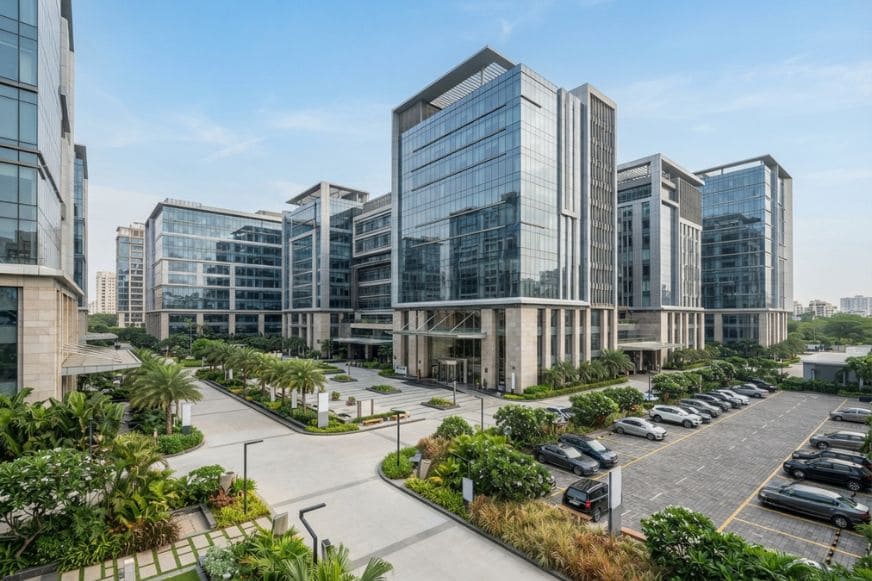
Choosing the right corporate office space is an important decision for every growing business. An office is more than just a physical location where employees work. It represents a company's identity, supports daily operations, influences employee productivity and creates an impression on clients and business partners. Whether a company is setting up a new office, expanding its operations or relocating, selecting the right workspace requires careful planning.
Today, businesses are looking beyond traditional office leasing. They need workspaces with modern infrastructure, customised interiors, flexible layouts and reliable operational support. This is where an experienced Enterprise Workspace Provider plays an important role by helping businesses identify, design, develop and manage office spaces according to their requirements.
Let's explore the important factors businesses should consider when selecting a corporate office space.
1. Understand Your Business and Workspace Requirements
Before searching for a commercial property, businesses should understand their current and future workspace requirements. Every organisation has different needs depending on its industry, workforce and operational activities.
Start by evaluating the number of employees, workstations, private cabins, meeting rooms, conference facilities, reception areas and common spaces required.
It is equally important to consider future expansion. Selecting an office that only meets immediate requirements may create challenges when the workforce increases.
An experienced Enterprise Workspace Provider can assess these requirements and recommend suitable office spaces based on team size, operational needs, budget and long-term business plans.
2. Choose the Right Commercial Office Location
Location is one of the most important factors in corporate office space selection. A well-connected office improves employee convenience, supports business operations and makes it easier for clients to visit.
Businesses should evaluate the following factors:
- Connectivity: Proximity to railway stations, metro connectivity, highways and major roads.
- Employee Accessibility: Convenient commuting options for employees.
- Business Environment: Commercial locations that align with the company's industry.
- Nearby Facilities: Restaurants, banks, hotels and other essential services.
- Future Development: Upcoming infrastructure projects and commercial developments.
For businesses operating in Mumbai and Navi Mumbai, locations such as Vashi, Turbhe, Airoli, Ghansoli, Belapur, Seawoods and Andheri offer different commercial office opportunities.
A professional workspace partner can help identify properties that match the preferred location, budget and operational requirements.
3. Evaluate Office Space Size and Layout
The size of an office is not the only factor that determines its suitability. Internal layout and space utilisation are equally important.
An efficiently planned workspace allows employees to work comfortably while ensuring that every area serves a practical purpose.
Before selecting a property, consider:
- Open workstations for employees.
- Private cabins for management teams.
- Conference and meeting rooms.
- Reception and waiting areas.
- Pantry and cafeteria facilities.
- Storage and utility areas.
- Dedicated IT infrastructure spaces.
The layout should also support smooth movement, adequate lighting and ventilation.
A professional Enterprise Workspace Provider can evaluate the available floor area and recommend layouts that make effective use of the space while supporting daily business operations.
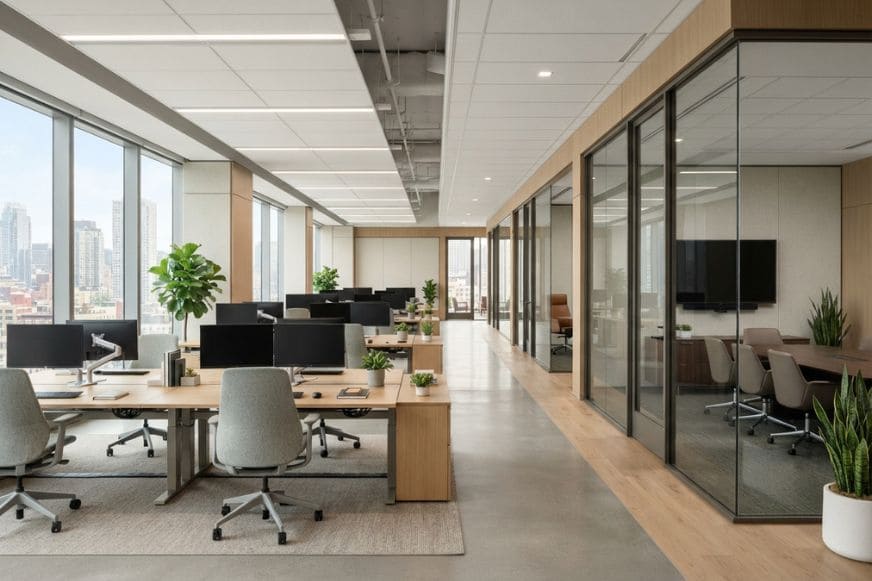
4. Consider Customised Office Interiors and Fit-Out Solutions
Every company has a different working culture, brand identity and operational structure. Therefore, a standard office layout may not always meet its requirements.
Customised office interiors help businesses create workspaces that reflect their brand while supporting employee comfort and productivity.
Office fit-out solutions may include reception design, workstation configurations, meeting room interiors, furniture installation, lighting, electrical planning, flooring, partitions, pantry development and branding elements.
Businesses should also consider durability, maintenance requirements and efficient space utilisation when selecting materials and furniture.
An integrated workspace partner can coordinate interior planning, design and execution, helping businesses avoid the challenges of managing multiple vendors.
5. Check IT Infrastructure and Technology Requirements
Technology plays an important role in modern business operations. A corporate office should have the infrastructure required to support communication, collaboration and everyday activities.
Important considerations include:
- High-speed internet connectivity.
- Structured networking and cabling.
- Wi-Fi infrastructure.
- Server and networking rooms.
- Power backup and electrical systems.
- Access control and CCTV surveillance.
- Video conferencing facilities.
- IT support and troubleshooting.
Businesses with technology-driven operations may require dedicated server rooms and advanced networking systems.
An Enterprise Workspace Provider offering end-to-end workspace solutions can coordinate IT infrastructure planning and implementation alongside office fit-outs, ensuring that technology requirements are considered from the beginning.
6. Evaluate Facility Management and Security Services
Selecting a commercial office is only one part of establishing a corporate workspace. Maintaining the office and ensuring smooth daily operations are equally important.
Businesses need reliable facility management and security services to maintain a clean, safe and organised working environment.
Essential services include:
Housekeeping and Cleaning: Regular cleaning of workstations, meeting rooms, washrooms and common areas.
Technical Maintenance: Maintenance of electrical systems, plumbing, air conditioning and other infrastructure.
Security Management: Trained security personnel, access control, CCTV monitoring and visitor management.
Pest Control: Periodic services to maintain workplace hygiene.
Pantry Management: Pantry and workplace support services.
Having these services coordinated through a professional service provider helps businesses maintain operational consistency and focus on their core activities.
7. Understand the Total Cost of the Workspace
Budget planning is another important aspect of corporate office space selection. Businesses should evaluate the overall cost of establishing and operating an office instead of considering only monthly rent.
The total investment may include:
- Monthly office rent or lease charges.
- Security deposits and advance payments.
- Interior design and fit-out expenses.
- Furniture and workstation costs.
- IT infrastructure and networking.
- Electricity and utility expenses.
- Housekeeping and maintenance charges.
- Security and facility management costs.
A detailed cost assessment helps businesses understand the financial commitment involved.
Companies should also compare traditional commercial leasing with customised managed office solutions. Depending on the property and service requirements, an integrated workspace solution may help streamline expenses and reduce the complexity of managing multiple vendors.
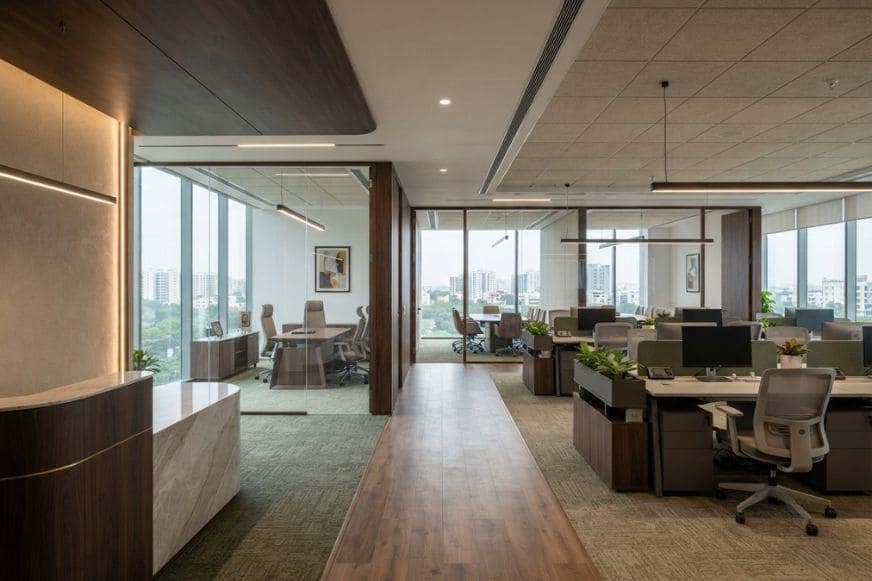
8. Look for Flexibility and Future Scalability
Business requirements can change over time. Companies may increase their workforce, introduce new departments or expand into additional markets.
Therefore, flexibility should be an important consideration when selecting a corporate office.
Consider the availability of additional space, scope for increasing workstation capacity, flexible cabin configurations, infrastructure readiness and lease renewal conditions.
An experienced Enterprise Workspace Provider can help businesses identify properties that offer expansion opportunities and recommend workspace configurations that support long-term growth.
9. Why Businesses Should Choose an Enterprise Workspace Provider
Managing an office setup independently can involve multiple vendors, property consultants, interior designers, IT contractors and facility management teams. Coordinating these activities requires considerable time and resources.
Working with a professional Enterprise Workspace Provider brings multiple workspace requirements under one coordinated approach.
An integrated workspace partner can assist businesses with:
- Space Identification: Finding commercial properties based on location, size and budget.
- Office Planning: Developing layouts according to employee strength and business activities.
- Design and Fit-Out: Customising interiors and managing execution.
- IT Infrastructure: Implementing essential technology and networking requirements.
- Facility Management: Coordinating housekeeping and maintenance.
- Security Solutions: Supporting workplace safety through professional security services.
This approach reduces the complexity of managing different service providers and creates a more organised office setup process.
Conclusion
Selecting the right corporate office space requires more than finding a suitable commercial property. Businesses must evaluate location, space planning, interiors, technology infrastructure, operational costs, security and future scalability before making a decision.
Partnering with an experienced Enterprise Workspace Provider can simplify the entire process by bringing property identification, customised fit-outs, IT infrastructure and facility management together under one coordinated solution.
At SONIP Space Konnect, we provide end-to-end workspace solutions, including commercial office space identification, customised interior planning, fit-out execution, IT infrastructure and facility management support.
Whether you are establishing a new corporate office, expanding your team or planning to relocate, we help you find and develop workspaces that align with your business requirements.
Looking for the right corporate office space for your business?
Connect with SONIP Space Konnect to explore customised workspace solutions.
Frequently Asked Questions (FAQs)
1. What is an Enterprise Workspace Provider?
An Enterprise Workspace Provider is a company that helps businesses identify, develop and manage corporate office spaces. Services may include commercial property identification, office planning, customised interiors, IT infrastructure and facility management.
2. How do I choose the right corporate office space?
Consider your business requirements, employee strength, preferred location, connectivity, office layout, infrastructure, budget and future expansion plans.
3. What services does an Enterprise Workspace Provider offer?
Services may include commercial office space identification, workspace planning, interior design, office fit-outs, IT infrastructure, security, housekeeping and facility management.
4. What is the difference between traditional office leasing and managed office space?
Traditional office leasing generally involves renting a commercial property and independently arranging interiors, furniture, IT infrastructure and maintenance. Managed office solutions can combine office premises with customised fit-outs, infrastructure and operational support.
5. Can corporate office spaces be customised?
Yes. Corporate offices can be customised according to employee strength, business operations and brand identity. This may include workstations, cabins, meeting rooms, reception areas, furniture and IT infrastructure.
6. Why are facility management services important for corporate offices?
Facility management services help maintain workplace hygiene, safety and operational efficiency through housekeeping, technical maintenance, security, pest control and preventive maintenance.
7. How can an Enterprise Workspace Provider help growing businesses?
An Enterprise Workspace Provider helps businesses identify suitable commercial properties, plan efficient layouts, customise interiors, implement IT infrastructure and coordinate facility management according to changing business requirements.