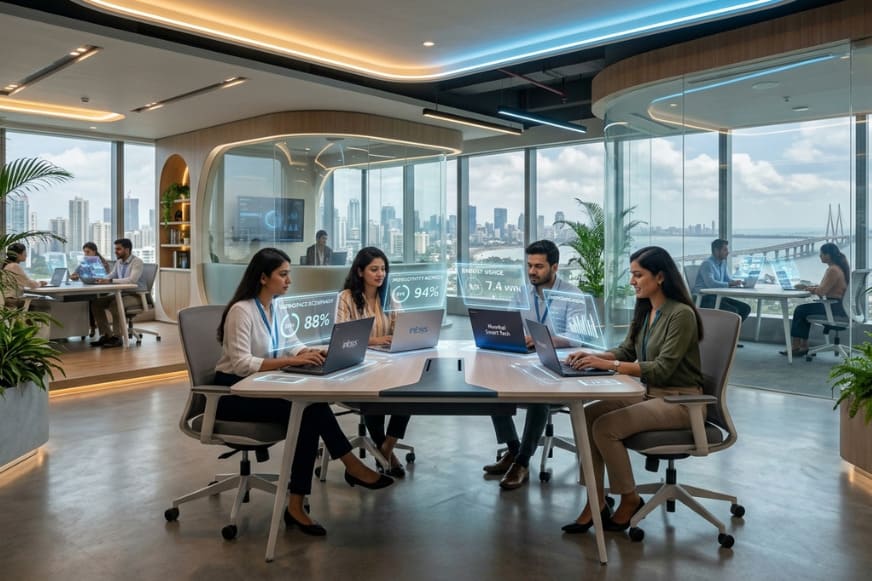
The workplace is changing in a major way. Old office setups are evolving into smart office solutions that use automation, connectivity, and data to improve how work gets done. Today, AI in the workplace is no longer just an idea. It is actively transforming how businesses operate, collaborate, and manage resources.
In India, the rise of tech enabled offices is clearly visible in cities like Mumbai, Bengaluru, and Delhi NCR. Companies are prioritizing flexibility, efficiency, and employee experience more than ever before. Managed workspace providers like Sonip Space Konnect are at the forefront of this shift, offering intelligent work environments that combine technology with modern business needs.
This blog explores how AI and smart office technologies are transforming managed workspaces and what this means for businesses in 2026 and beyond.
Understanding Smart Office Solutions in Today’s Work Culture
Smart office solutions refer to workplaces that use technologies such as IoT, AI, automation tools, and cloud-based systems to improve efficiency and employee experience. These offices are designed to reduce manual effort, increase productivity, and ensure smoother operations.
Unlike traditional offices where systems operate in isolation, smart offices function as connected ecosystems. Everything—from lighting and temperature to meeting room bookings and security is managed digitally and often automatically.
Key Elements of Smart Office Infrastructure
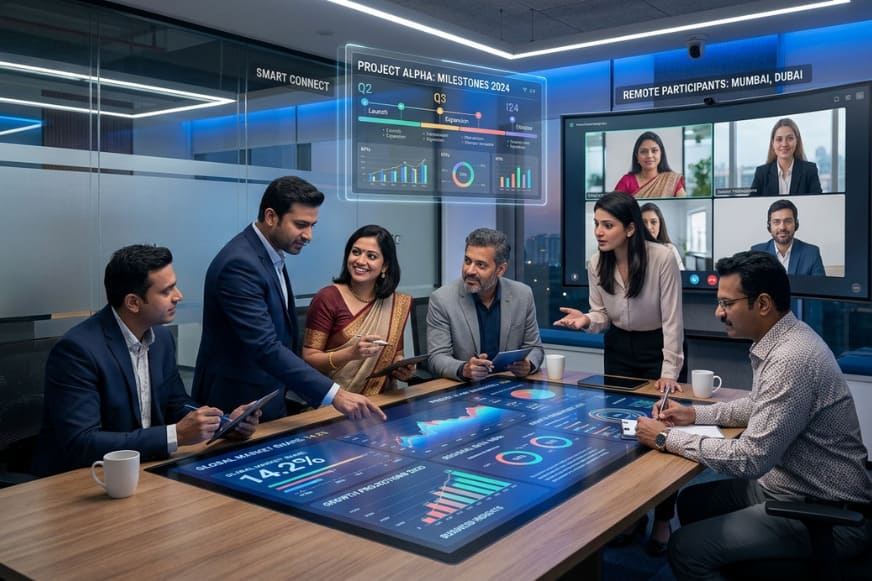
A smart office is built on multiple technological layers that work together seamlessly. These include AI-powered analytics, automated facility management systems, smart sensors, and integrated communication platforms. Each of these components plays a role in making the workspace more responsive, efficient, and user-friendly.
These systems continuously collect and analyze data, helping businesses understand how office spaces are being used and how they can be improved over time.
Why Businesses Are Shifting Toward Smart Offices
Companies are increasingly adopting smart office models because they want better cost control, improved employee satisfaction, and stronger operational insights. In highly competitive markets, even small efficiency improvements can lead to significant business advantages.
Smart offices also support hybrid work models, which have become a standard across many industries.
The Role of AI in the Modern Workplace
AI in the workplace is changing how tasks are managed, how decisions are made, and how resources are allocated. From predictive maintenance to intelligent scheduling systems, AI has become a core part of modern office infrastructure.
AI tools can analyze workplace data in real time and generate actionable insights. For example, they can predict peak office usage hours, optimize energy consumption, and even suggest better workspace layouts based on employee behavior patterns.
AI-Powered Workplace Automation
One of the biggest contributions of AI is automation. Routine tasks such as visitor management, desk allocation, and meeting scheduling are now handled by intelligent systems.
This reduces human error, saves time, and allows employees to focus on more strategic and creative work. AI-powered chatbots are also widely used in managed offices to assist with IT support, facility requests, and onboarding processes, ensuring smooth daily operations.
Data-Driven Decision Making
AI enables organizations to make smarter decisions by analyzing workplace data such as attendance trends, space utilization, and energy consumption.
With these insights, businesses can optimize office layouts, reduce wastage, and improve overall operational efficiency. This data-first approach is becoming essential in modern workspace management.
Tech Enabled Offices in India – A Growing Trend
India is experiencing a rapid rise in demand for tech enabled offices, especially among startups, IT companies, and multinational corporations. This growth is driven by hybrid work culture, cost optimization needs, and increasing awareness of workplace technology.
Cities like Mumbai are leading this transformation due to high demand for flexible office spaces and managed workspace solutions. Businesses today are not just looking for physical office space—they are looking for intelligent environments that support productivity, scalability, and employee well-being.
Smart Workspaces and Hybrid Work Models
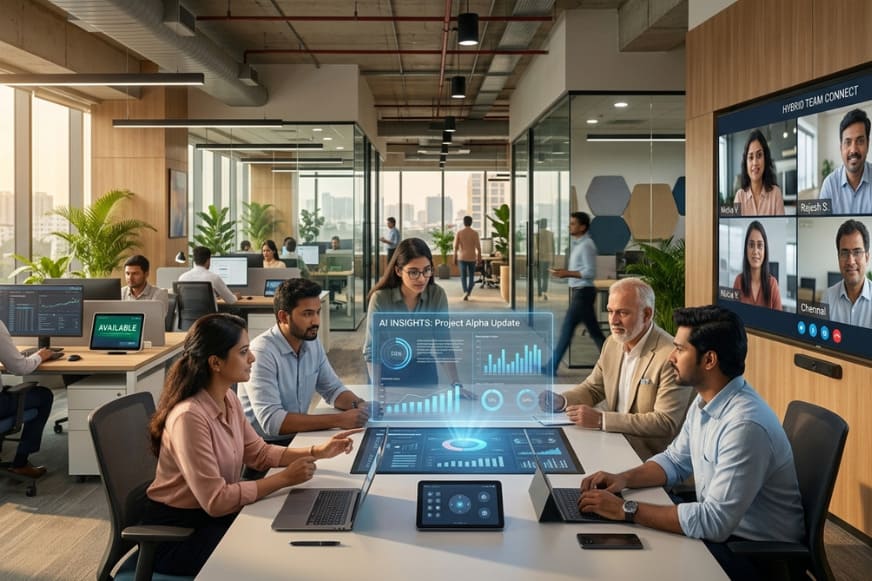
Hybrid work has become a standard model across many industries. Smart offices support this shift by integrating digital tools that allow employees to work seamlessly from anywhere.
Cloud-based collaboration platforms, virtual meeting systems, and AI-driven scheduling tools ensure that remote and in-office employees stay connected without disruption. This creates a unified work experience regardless of location.
Energy Efficiency and Sustainability in Smart Offices
Another important advantage of tech enabled offices is sustainability. Smart systems can automatically control lighting, air conditioning, and power usage based on occupancy.
This not only reduces energy costs but also supports corporate sustainability goals. Over time, these systems contribute to greener and more responsible business operations.
How Managed Workspace Providers Are Leading the Change
Managed workspace providers play a crucial role in delivering smart office experiences. Instead of businesses investing heavily in infrastructure, they can opt for fully managed environments equipped with advanced technology.
Sonip Space Konnect is one such provider offering enterprise-grade office solutions, co-working spaces, virtual offices, and workspace upgrades designed with integrated technology.
Integrated Office Management Systems
Managed workspaces combine multiple services into a single ecosystem. These include facility management, IT support, security systems, and space optimization tools.
AI ensures that all these systems work together efficiently in real time. This integration allows businesses to focus on growth while the workspace provider handles operational complexity in the background.
Customization and Scalability
One of the biggest advantages of smart managed offices is flexibility. Businesses can scale their operations up or down depending on demand without worrying about infrastructure limitations.
AI systems help track usage patterns and suggest optimal workspace configurations, making expansion or consolidation more efficient and cost-effective.
Benefits of AI-Driven Smart Office Solutions
Enhanced Productivity and Collaboration
Smart offices reduce time wasted on manual tasks and administrative delays. Employees can access resources instantly, book meeting rooms efficiently, and collaborate using integrated digital platforms.
This leads to better coordination, smoother workflows, and faster decision-making across teams and departments.
Improved Security and Access Control
AI-powered security systems enhance workplace safety through facial recognition, automated access control, and real-time monitoring.
These systems ensure that only authorized individuals can access specific areas, improving both physical and digital security within the workspace.
Cost Optimization and Resource Management
Smart systems help businesses reduce operational costs by optimizing energy usage and improving space utilization.
Over time, this leads to significant savings, especially for large organizations managing multiple office locations or large teams.
Challenges in Implementing Smart Office Technology
While smart offices offer many benefits, implementation comes with certain challenges. Businesses often face issues such as high initial setup costs, integration complexity, and data privacy concerns.
However, managed workspace providers help overcome these challenges by offering ready-to-use smart environments. This reduces the need for heavy infrastructure investment and simplifies technology adoption.
Data Security and Privacy Concerns
With increasing reliance on AI and IoT devices, data security becomes a critical concern. Organizations must ensure that workplace data is securely stored, monitored, and managed in compliance with regulations.
Strong cybersecurity systems and governance policies are essential for maintaining trust and reliability.
Training and Employee Adaptation
Another challenge is employee adaptation. Teams need time and training to effectively use new tools and systems.
However, most employees adapt quickly as these technologies are designed to simplify tasks and improve daily workflows rather than complicate them.
The Future of Smart Offices in India
The future of workplaces in India is clearly digital, flexible, and AI-driven. As hybrid work models continue to evolve, the demand for smart office solutions will grow significantly.
We can expect more advanced innovations such as AI-driven workspace personalization, predictive office environments, and fully automated facility management systems.
Managed workspace providers will play a key role in this evolution by offering integrated ecosystems that combine technology, flexibility, and user experience.
Conclusion
AI and smart office technologies are fundamentally changing how businesses operate in India. From improving productivity to reducing operational costs, the impact of AI in the workplace is both significant and long-lasting.
As organizations continue to shift toward tech enabled offices, managed workspace providers are becoming increasingly important. Companies like Sonip Space Konnect are helping businesses transition smoothly into this new era of intelligent work environments.
The future of work is no longer just about physical space—it is about smart systems, seamless experiences, and scalable growth.
FAQs
What are smart office solutions?
Smart office solutions are technology-driven workplace systems that use AI, IoT, and automation to improve efficiency, productivity, and employee experience.
How is AI used in the workplace?
AI is used for automation, data analysis, security management, predictive maintenance, and improving overall workplace efficiency.
What are tech enabled offices?
Tech enabled offices are modern workspaces equipped with digital tools and smart systems that support hybrid work, automation, and real-time data management.
Why are managed workspaces becoming popular in India?
Managed workspaces are popular because they offer flexibility, cost savings, and access to advanced infrastructure without heavy capital investment.
What is the future of offices in India?
The future includes AI-powered automation, personalized work environments, and fully integrated digital office ecosystems that support hybrid and remote work models.