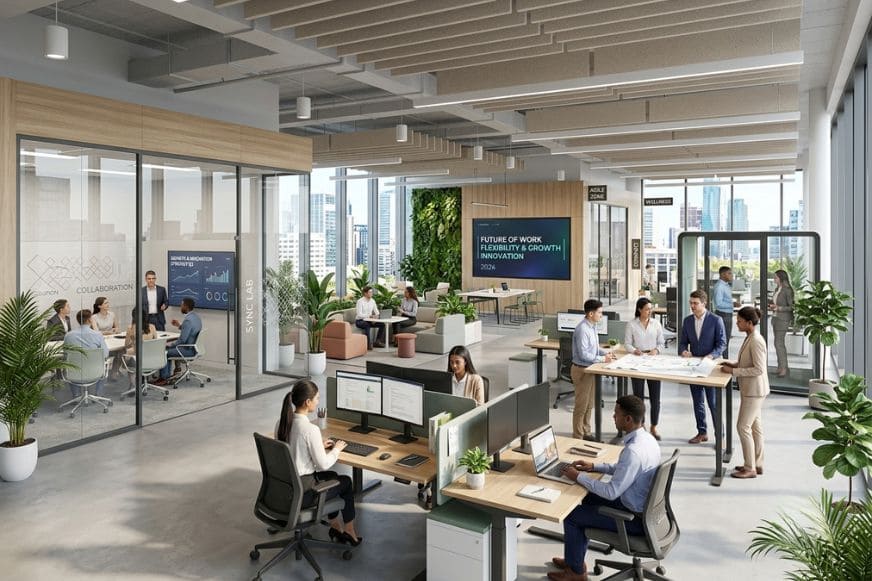
For a time, companies thought that the size of their office was the most important thing. They believed that a bigger office meant they were doing well and were stable. Now things have changed. A modern workplace is not a place where people go to work. It is a tool that helps companies succeed.
Companies are looking for more than a big office space. They want a workplace that helps them achieve their goals. They consider things like flexibility, technology, employee well-being, and how well the office runs.
A designed modern workplace is a place where people can work better, teams can collaborate, and companies can adapt to changes in the market.
This has led to an increase in demand for managed office spaces and flexible workspace solutions. These solutions allow companies to create workplaces without the hassle of traditional office setup and management.
Why Square Feet Alone Is No Longer Enough to Measure Workplace Value
In the past, companies only looked at things like location, size, rent, and infrastructure when choosing an office space. While these things are still important, they do not tell the complete story.
A big office space may look impressive, but if the layout is bad, there are no areas for collaboration, the technology is outdated, or the facilities are not efficient, then the workplace may not be helping the company succeed.
Modern companies understand that a successful workplace is one that supports its people and processes.
A good workplace should answer some questions:
- Does the workspace help employees be more productive?
- Does it support collaboration and innovation?
- Can it adapt to changing business needs?
- Does it create an experience for employees?
- Does it reflect the company’s brand and culture?
The future of workplace strategy is not about having space; it is about creating smarter and more meaningful spaces.
The Real Value Drivers of a Modern Workplace
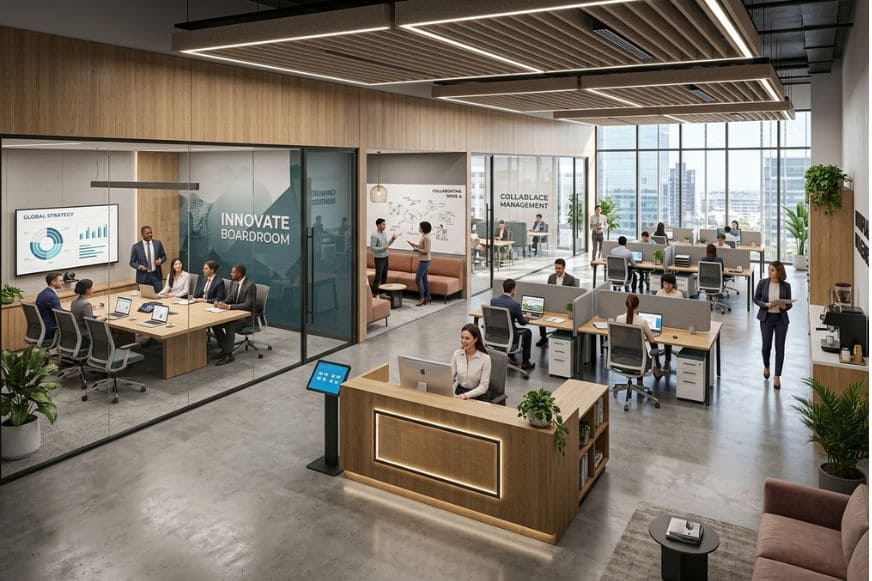
1. Employee Experience: The Foundation of Workplace Success
Employees today expect more from their workplace than a desk and a meeting room. The workplace is a factor in attracting and keeping good employees.
A modern workplace focuses on creating an environment that supports comfort, creativity, collaboration, and engagement. From workstations to collaborative zones, every element contributes to employee satisfaction.
Companies that invest in employee-centric workplaces often see improved morale, better collaboration, and a stronger workplace culture.
A designed office space shows that a company values its people and understands their needs.
2. Productivity Beyond Physical Space
The value of an office cannot be measured by the number of seats it has. The real impact comes from how employees can work in that environment.
Modern workplaces are designed to support different work styles. Employees may need areas for focused work, collaborative spaces for brainstorming, and technology-enabled rooms for meetings.
The right workplace design reduces distractions, improves communication, and enables employees to perform at their best.
This is why companies are choosing customized managed office space solutions that align with their goals.
You can learn more about workplace solutions at SONIP Space Konnect.
3. Flexibility: Preparing Businesses for Future Growth
Business needs are always changing. Companies grow, restructure teams, adopt working models, or enter new markets.
Traditional office leases often do not provide the flexibility needed to respond to these changes. Modern businesses need workplaces that can scale according to their requirements.
Flexible workspace solutions allow companies to expand or reduce office capacity, create layouts, reduce setup time, and focus on business growth.
A flexible workplace strategy provides businesses with the agility they need to succeed.
4. Technology-Enabled Workplaces
Technology is a part of modern office environments. Smart workplaces use solutions to improve efficiency, security, and employee experience.
From automated access systems to meeting rooms, technology helps organizations create efficient and connected work environments.
A technology-enabled workplace provides visibility into space utilization and helps companies make informed decisions.
The integration of technology also supports working models, allowing employees to collaborate seamlessly.
5. Operational Efficiency and Cost Optimization
A workplace should help a business run efficiently, not become a burden.
Managing office infrastructure, maintenance, security, and daily operations requires a lot of time and resources. Managed office spaces provide value in this area.
With a managed workspace solution, businesses can access equipped offices and professional support services, allowing them to focus on their core operations.
The true cost of an office is not rent; it includes maintenance expenses, downtime, and management efforts.
A managed workplace reduces these challenges while improving overall efficiency.
6. Workplace Design as a Reflection of Brand Identity
An office is often the first physical interaction clients, partners, and employees have with a company.
A designed workplace reflects an organization’s values, culture, and commitment to excellence.
Modern businesses are investing in office interiors that create meaningful experiences.
From reception areas to spaces, every design element contributes to brand perception.
SONIP Space Konnect helps businesses create commercial office environments that align with their brand identity and operational needs.
You can explore office fit-out solutions at SONIP Space Konnect.
7. Sustainability and Responsible Workplace Practices
Sustainable workplaces are becoming increasingly important for organizations worldwide.
Modern office spaces are adopting responsible practices such as energy-efficient systems and sustainable materials.
Sustainable workplaces also improve employee satisfaction and strengthen corporate responsibility initiatives.
Companies are evaluating workplaces based on their ability to support long-term sustainability goals.
How Managed Office Spaces Are Redefining Workplace Value
The rise of managed office spaces has changed the way businesses approach real estate.
Instead of spending months designing and managing an office, companies can access ready-to-use customized workplaces.
Managed office solutions combine locations, customized interiors, technology infrastructure, facility management support, and flexible scalability.
This approach allows companies to create high-quality workplaces while reducing complexity and improving efficiency.
For growing businesses, managed workplaces provide the balance between flexibility and professionalism.
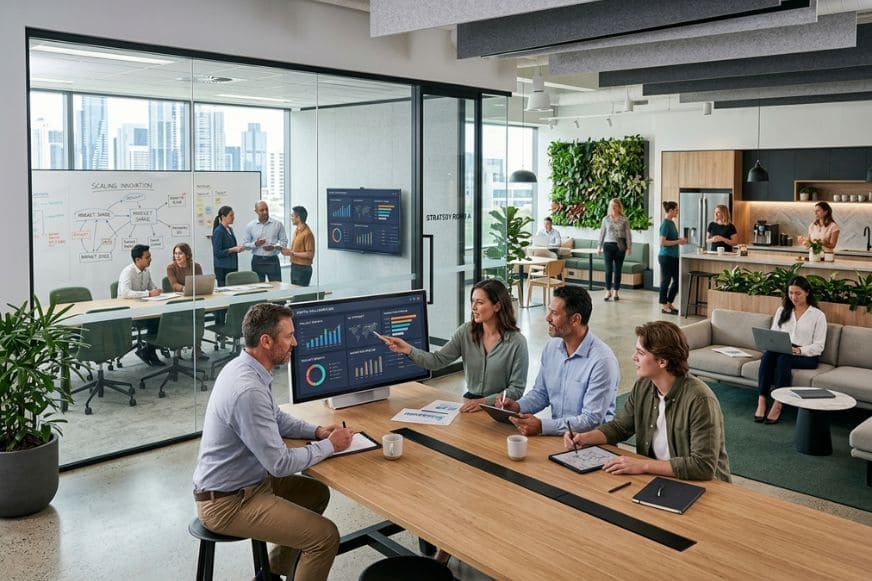
Measuring the Success of a Modern Workplace
Organizations can evaluate workplace performance through factors beyond space utilization.
Important indicators include employee engagement, business agility, operational performance, brand impact, and cost efficiency.
The future of workplace measurement will focus on how the space supports the business, not just the size of the space.
The Future of Workplace Strategy
The future workplace will continue to evolve with changing employee expectations, technological advancements, and business requirements.
Organizations will prioritize workplaces that offer flexibility, collaboration, sustainability, and enhanced employee experiences.
Successful companies will invest in environments that support innovation, productivity, and long-term growth.
A modern workplace is no longer a physical address; it is a strategic advantage.
The true value of a workplace goes beyond square feet. While physical space is still important, the success of a workplace depends on how well it supports people, processes, and business goals.
Companies that embrace workplace strategies can create environments that improve productivity, strengthen culture, and enable future growth.
With the combination of design, technology, flexibility, and professional management, workplaces can become powerful tools for business success.
SONIP Space Konnect helps organizations create customized managed office spaces that deliver workplaces built for the future.
You can discover managed office spaces across India at SONIP Space Konnect.
Frequently Asked Questions (FAQs)
1. What defines a modern workplace?
A modern workplace is designed to support employee productivity, collaboration, flexibility, and business growth. It combines design, technology, and efficient workplace management.
2. Why are companies moving towards managed office spaces?
Companies prefer managed office spaces because they provide ready-to-use workplaces, customized solutions, and operational support.
3. How is the value of a workplace measured beyond square feet?
Workplace value is measured through employee experience, productivity, flexibility, technology adoption, operational efficiency, sustainability, and business impact.
4. What are the benefits of a flexible workspace solution?
Flexible workspace solutions help businesses scale easily, reduce complexity, optimize costs, and create workplaces that adapt to changing business needs.
5. How does workplace design impact employee productivity?
Effective workplace design improves collaboration, reduces distractions, enhances comfort, and creates an environment where employees can work efficiently.
6. Why is facility management important for workplaces?
Professional facility management ensures daily operations, safety, cleanliness, maintenance, and a better workplace experience.
7. How can SONIP Space Konnect help businesses create modern workplaces?
SONIP Space Konnect provides customized managed office space solutions, including workspace design, office setup, interiors, and integrated workplace support to help businesses create efficient and future-ready offices.