
Choosing a large office space is an important decision for any growing business. As companies expand their teams, enter new markets, or establish a stronger corporate presence, they often look for larger commercial offices that can support their future plans. However, renting big office spaces requires more than finding a suitable location and signing a lease agreement. Businesses must carefully evaluate their space requirements, rental costs, infrastructure, flexibility, and long-term operational needs before making a commitment.
A poorly planned office rental decision can lead to unnecessary expenses, underutilised space, operational challenges, and difficulties when the business needs to scale. On the other hand, choosing the right office space can improve employee productivity, support collaboration, strengthen brand image, and create a comfortable working environment.
For businesses looking for managed office solutions, SONIP Space Konnect offers workspace solutions designed around business requirements, including customised fit-outs, IT infrastructure, and facility management support.
In this blog, we explore the common mistakes businesses make when renting big office spaces and how companies can avoid them to make smarter, more cost-effective decisions.
1. Renting More Office Space Than Required
One of the most common mistakes businesses make when renting big office spaces is choosing a property that is larger than their actual requirements. A spacious office may look impressive during a site visit, but unused desks, empty meeting rooms, and unoccupied areas can increase rental and maintenance costs without delivering real business value.
Some companies estimate their requirements based only on their current team size, while others rent additional space based on uncertain future expansion plans. Both approaches can create problems if the available area does not match actual business needs.
Before finalising a property, businesses should assess their existing employee strength, expected hiring plans, departmental requirements, meeting room usage, and collaborative areas. The objective should be to select an office that supports current operations while allowing reasonable room for growth.
A carefully planned layout can often accommodate a growing team more efficiently than simply renting a larger property. Businesses should also evaluate how much of the office will be used daily instead of focusing only on the total square footage.
2. Ignoring the Total Cost of Renting an Office
Another major mistake is evaluating office space only on the basis of monthly rent. The actual cost of occupying a commercial office includes several additional expenses that can significantly affect the company's budget.
Depending on the property and lease terms, businesses may need to account for security deposits, maintenance charges, electricity, internet connectivity, parking, property-related taxes charged to tenants, fit-out expenses, and other applicable fees. Moving costs and ongoing facility management expenses can also add to the overall investment.
For large offices, even a small difference in the cost per square foot can translate into a substantial financial commitment over the lease period.
Companies should calculate the total cost of occupancy before signing the agreement. This includes reviewing the initial setup investment, recurring monthly expenses, contractual rent increases, and the potential cost of restoring the premises when leaving.
Businesses should also compare traditional leased offices with managed office solutions. Depending on the scope of services included, a managed office arrangement may help reduce the need to coordinate multiple vendors for interiors, IT infrastructure, housekeeping, maintenance, and security.
With SONIP Space Konnect, businesses can explore managed workspace solutions that bring essential office requirements together under one service partner, subject to the selected scope and agreement.
3. Choosing the Wrong Office Location
A large office space may offer attractive interiors and competitive rent, but the wrong location can create daily challenges for employees, clients, and business operations.
For example, an office located far from major transport routes may increase employee commute times. Limited parking, poor road connectivity, or a lack of nearby food and convenience facilities can also affect the overall workplace experience.
Location is particularly important for businesses that regularly meet clients, coordinate with vendors, or depend on employees travelling between multiple sites.
When evaluating a commercial office, businesses should consider connectivity to railway stations, highways, public transport, business districts, and essential services. They should also assess the location's suitability for their customers, employees, and long-term business strategy.
Companies exploring commercial office spaces in Mumbai and Navi Mumbai can compare locations such as Andheri, Worli, Vashi, Seawoods, Turbhe, Belapur, and Airoli, depending on their operational needs and budget.
The right location is not necessarily the most expensive or prestigious one. It is the location that offers the best balance of accessibility, cost, convenience, and business suitability.
4. Overlooking Future Business Growth
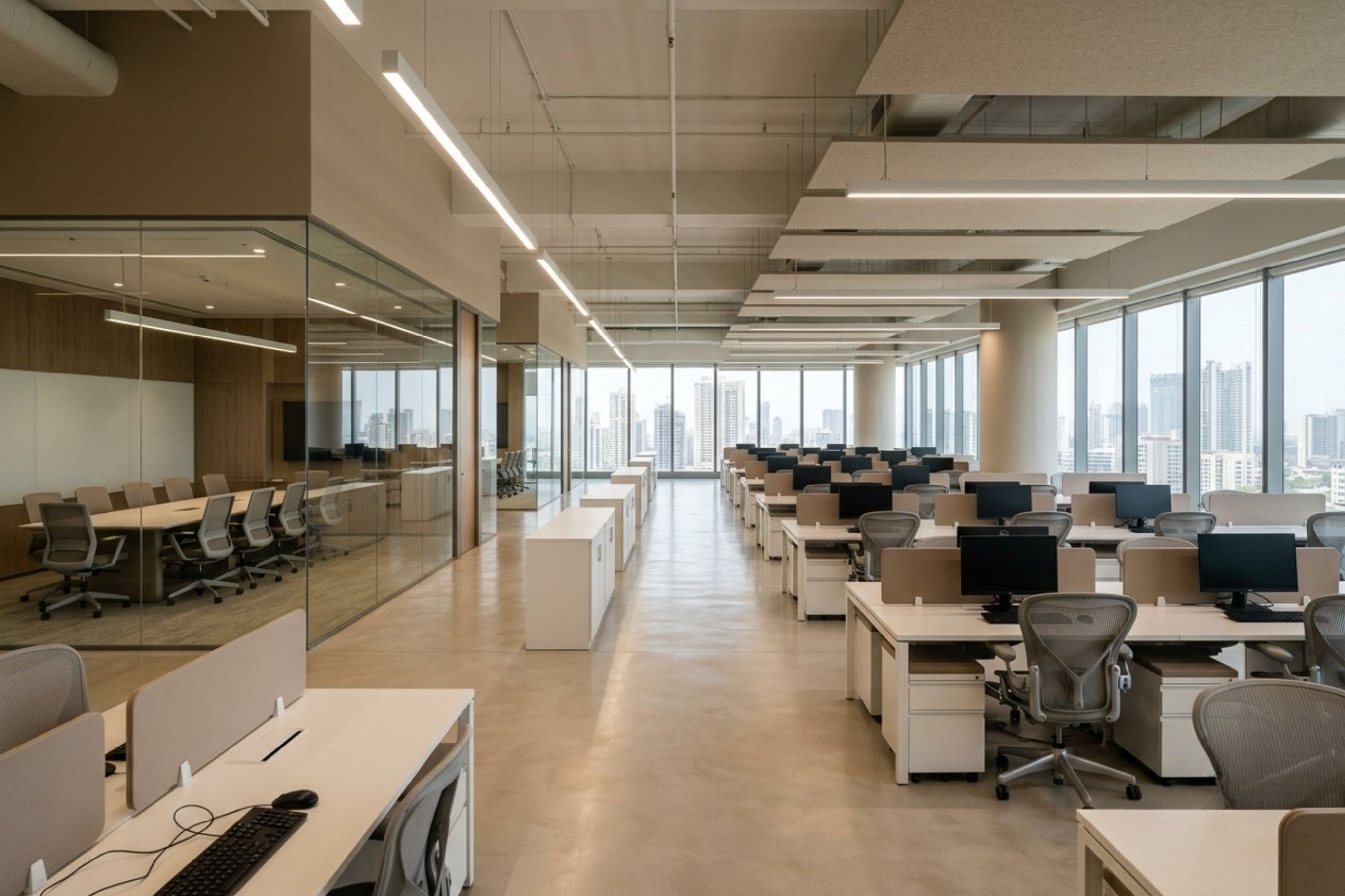
Renting an office based only on current requirements can create problems when a business expands. As employee strength increases, companies may need additional workstations, larger meeting rooms, more storage, improved IT infrastructure, and additional support facilities.
If the selected office cannot accommodate these changes, the business may be forced to relocate before the lease expires. Relocation can involve significant costs, operational disruption, employee inconvenience, and additional setup work.
At the same time, renting an excessively large office in anticipation of rapid growth can create unnecessary expenses if expansion takes longer than expected.
Businesses should therefore develop a realistic growth plan before choosing a property. They should estimate possible hiring requirements, evaluate the flexibility of the floor layout, and understand whether additional space may be available in the same building.
Lease terms should also be reviewed carefully to understand options relating to expansion, renewal, early termination, and additional space.
A flexible workspace solution can be useful for companies whose team size or operational requirements may change over time.
5. Not Checking the Office Infrastructure Properly
A commercial property may appear ready for occupation, but its infrastructure may not support the company's actual requirements. This is especially important when renting a large office with multiple departments, meeting rooms, and technology-dependent operations.
Businesses that overlook infrastructure may face unexpected expenses after moving in. Electrical systems may require upgrades, internet connectivity may be inadequate, air-conditioning may not cover all occupied areas effectively, and power backup may not meet operational needs.
Before signing a lease, companies should inspect the building and the proposed office area carefully. They should check electrical capacity, internet service availability, air-conditioning, lifts, washrooms, fire safety arrangements, power backup, and other essential facilities.
Businesses with specialised requirements should also assess server rooms, access control systems, CCTV infrastructure, network cabling, and meeting room technology.
A detailed infrastructure assessment helps identify potential issues before they become expensive problems. It also allows businesses to clarify which improvements are the landlord's responsibility and which costs must be borne by the tenant.
6. Underestimating Office Fit-Out and Interior Costs
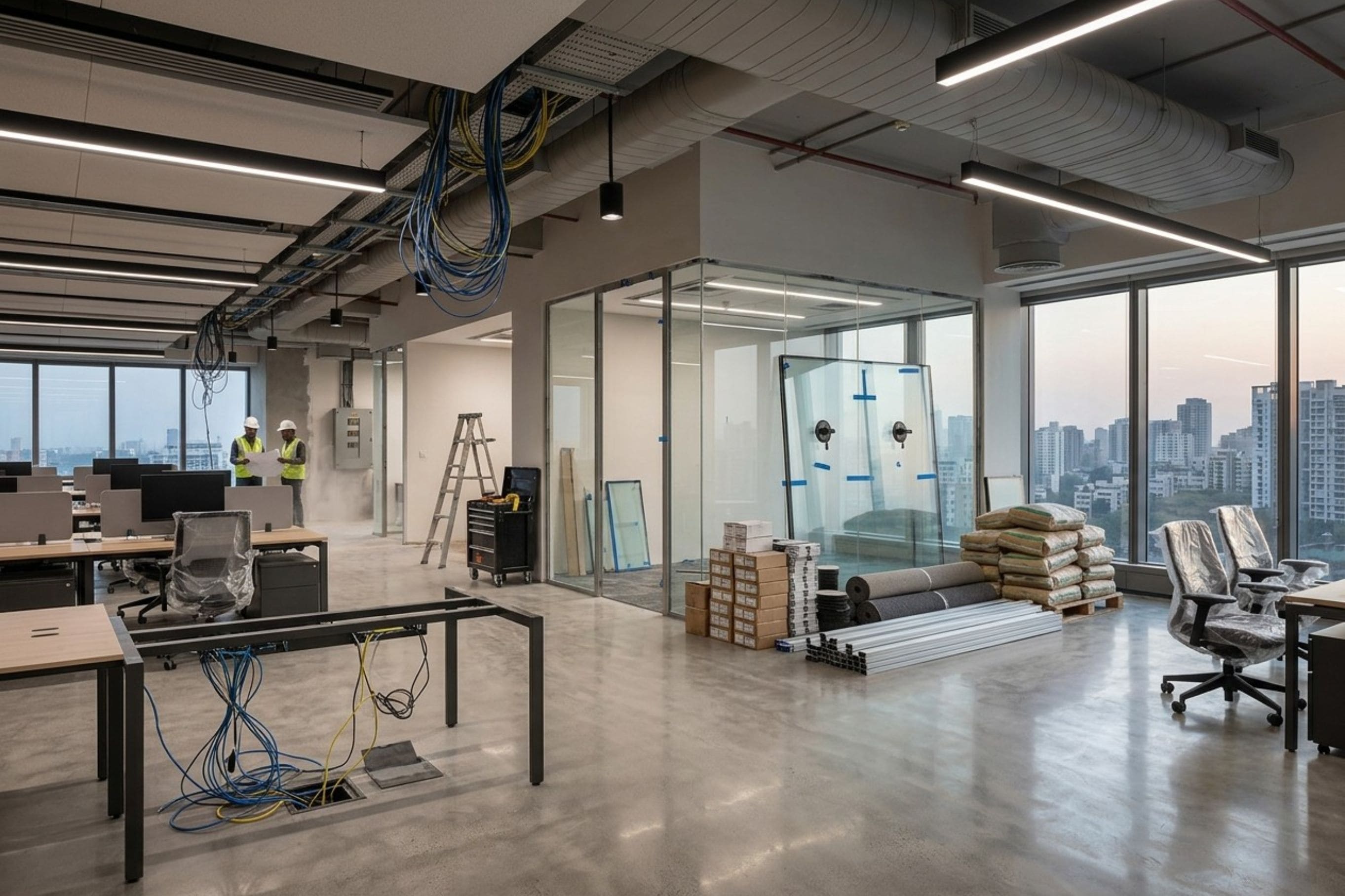
Large office spaces often require substantial planning before employees can begin working comfortably. An empty commercial unit may need partitions, workstations, meeting rooms, reception areas, electrical installations, lighting, furniture, branding, and other interior work.
Businesses sometimes focus on the rental price without calculating the time and money needed to transform the premises into a functional workplace.
Poorly planned interiors can also lead to inefficient layouts, uncomfortable workstations, insufficient storage, and underused meeting rooms. Changes made after the office becomes operational may create additional expenses and disrupt employees.
To avoid these problems, businesses should prepare a fit-out plan before finalising the property. The plan should reflect departmental requirements, employee capacity, workplace design, technology needs, and the company's brand identity.
It is equally important to clarify permissions, fit-out timelines, contractor responsibilities, and the ownership of installed fixtures under the lease agreement.
Businesses that prefer a more integrated approach can explore SONIP Space Konnect's managed office solutions, which can include workspace planning, customised fit-outs, design and execution, and supporting infrastructure according to the agreed requirements.
7. Ignoring Employee Comfort and Productivity
A large office does not automatically create a productive workplace. If the layout is poorly designed, employees may experience noise, overcrowding in shared areas, inadequate lighting, uncomfortable temperatures, or a lack of suitable spaces for focused work.
These issues can affect concentration, collaboration, and overall employee satisfaction.
When renting big office spaces, businesses should think beyond the number of desks that can fit into a floor. They should consider how employees will move around the office, where teams will collaborate, and whether the environment supports different working styles.
Natural light, comfortable seating, good ventilation, well-planned meeting rooms, pantry facilities, and clean common areas all contribute to a better workplace experience.
The office layout should also support accessibility, safety, and the needs of employees with different responsibilities.
A practical workplace design balances efficient space utilisation with comfort. Instead of maximising workstation density, companies should aim to create an environment where employees can perform their tasks effectively.
8. Not Reviewing the Lease Agreement Carefully
A commercial lease agreement defines the rights, responsibilities, costs, and obligations of both the landlord and the tenant. Signing it without reviewing the details can expose a business to avoidable financial and operational risks.
Companies sometimes concentrate on the rental amount and lease duration while overlooking other important clauses. These may include rent escalation, security deposit refunds, maintenance responsibilities, restrictions on modifications, renewal options, notice periods, and conditions for early termination.
Businesses should also confirm the permitted use of the premises, applicable approvals, parking arrangements, signage permissions, and responsibility for repairs.
For large office spaces, these details become especially important because the financial commitment and potential relocation costs are often higher.
Before signing, businesses should have the agreement reviewed by a qualified legal professional. They should ensure that all negotiated terms are recorded in writing and that any additional charges or obligations are clearly understood.
A careful review helps prevent misunderstandings and provides greater clarity throughout the tenancy.
9. Overlooking Security and Facility Management
An office is not fully functional simply because the space is available and the interiors are complete. Daily operations also depend on reliable security, housekeeping, technical maintenance, waste management, and other support services.
Businesses renting large office spaces sometimes assume that the building's existing services will cover all their operational requirements. However, the scope of building management services may differ from what the tenant needs inside its own office.
For example, a company may require controlled employee access, visitor management, CCTV coverage, regular cleaning, pantry support, preventive maintenance, or dedicated technical assistance.
Before moving in, businesses should identify which services are provided by the landlord or building management and which services they must arrange independently.
They should also establish clear responsibilities, service schedules, escalation procedures, and expected response times.
A reliable facility management plan helps maintain a safe, clean, and efficient workplace while allowing employees to focus on their core responsibilities. Businesses can learn more about integrated workplace services through SONIP Global Security and Facility Management, which provides security and facility management solutions.
10. Failing to Plan for IT and Digital Infrastructure
Modern businesses rely on stable internet connectivity, secure networks, communication systems, and digital collaboration tools. An office that cannot support these requirements may affect productivity from the first day of operations.
This challenge is particularly relevant for companies with large teams, multiple departments, client-facing operations, or data-intensive workflows.
Before choosing a property, businesses should assess internet service providers, network coverage, structured cabling, Wi-Fi capacity, power backup, access control, and the requirements of meeting rooms and conference facilities.
Companies should also consider cybersecurity, secure network configuration, equipment storage, and access permissions where relevant.
IT requirements should be integrated into the office layout and fit-out plan from the beginning. Retrofitting network infrastructure after the office is occupied can be more disruptive and expensive.
Coordinating IT planning with interior design and facility requirements helps create a more dependable workplace.
11. Not Comparing Traditional Leasing With Managed Office Solutions
Many businesses assume that signing a conventional commercial lease is the only option for securing a large office. However, the most suitable arrangement depends on the company's budget, timeline, internal resources, and operational needs.
A traditional lease may offer greater control over the premises, but the business may need to coordinate multiple vendors for interiors, furniture, IT setup, housekeeping, security, and maintenance.
Managed office solutions can offer a more integrated alternative by combining selected workspace and operational services under one arrangement. The precise inclusions, costs, and responsibilities depend on the provider and agreement.
For businesses that want to reduce coordination across multiple vendors, this approach may simplify the process of setting up and managing a workplace.
Before deciding, companies should compare the total cost, fit-out investment, service inclusions, contract flexibility, customisation options, and long-term suitability of both models.
Explore SONIP Space Konnect to understand how managed office solutions can support businesses seeking customised and professionally managed workspaces.
12. Rushing the Decision Without Comparing Multiple Options
Pressure to relocate quickly or accommodate a growing team can encourage businesses to finalise the first suitable property they find. However, making a decision without comparing alternatives can result in higher costs or an office that does not meet long-term requirements.
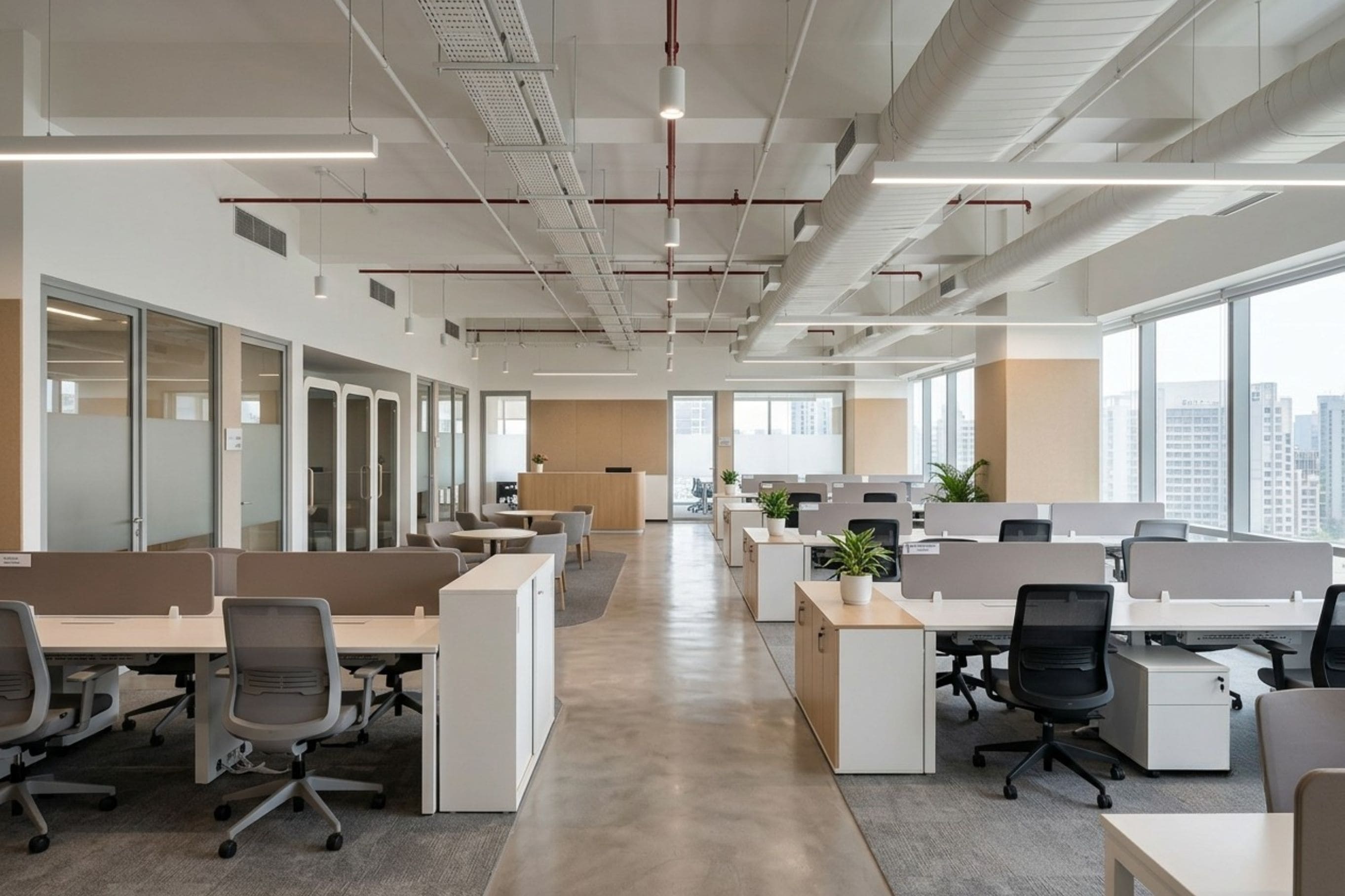
Businesses should evaluate several properties against the same set of criteria, including location, usable area, rental cost, infrastructure, fit-out requirements, connectivity, and lease conditions.
Site visits are important because photographs and property descriptions may not reveal noise levels, access limitations, parking challenges, or practical layout issues.
Companies should also verify the information provided by the landlord or property representative and clarify any unanswered questions before making a financial commitment.
A structured comparison allows decision-makers to identify the most suitable option rather than simply choosing the largest or most visually attractive office.
How Can Businesses Choose the Right Large Office Space?
Avoiding common rental mistakes begins with a clear understanding of business needs. Companies should define their current requirements, estimate future growth, establish a realistic budget, and identify the facilities necessary for daily operations.
The decision should consider the complete workplace experience, from employee accessibility and office design to IT infrastructure, security, maintenance, and lease flexibility.
Before finalising an office, businesses should:
- Calculate the total cost of occupancy, including setup and recurring expenses.
- Inspect the property, infrastructure, and essential building facilities.
- Review lease terms, permissions, responsibilities, and exit conditions.
- Compare traditional leasing and managed office solutions.
- Evaluate whether the space can support future business requirements.
With the right planning and professional support, businesses can avoid unnecessary costs and choose an office that supports sustainable growth.
Conclusion
Renting a large office space is a significant business decision that can influence operating costs, employee productivity, and future expansion. Mistakes such as choosing excessive space, overlooking hidden costs, ignoring infrastructure, underestimating fit-out expenses, and failing to review lease conditions can create challenges long after the agreement is signed.
The key is to look beyond the size and appearance of the property. Businesses should assess how well the space supports their people, technology, daily operations, and long-term objectives.
SONIP Space Konnect helps businesses explore managed office solutions that can bring together workspace selection, customised fit-outs, IT infrastructure, and facility management support. With a clear understanding of your requirements and the right workspace partner, you can make a more informed decision about your next office.
Visit www.sonipspace.com to explore workspace solutions for your business.
Frequently Asked Questions (FAQs)
1. What should businesses consider before renting a large office space?
Businesses should consider location, total rental costs, usable area, employee capacity, infrastructure, fit-out requirements, security, facility management, and lease conditions. Future expansion plans and employee commuting needs should also be considered before finalising the property.
2. How much office space does a growing business need?
The required office space depends on employee strength, seating arrangements, meeting rooms, departmental functions, workplace policies, and future hiring plans. Businesses should prepare a space utilisation plan before deciding on the total area.
3. What hidden costs should businesses check when renting an office?
Potential additional costs include security deposits, maintenance charges, utilities, internet, parking, fit-outs, furniture, IT installations, relocation, and contractual rent increases. The applicable expenses depend on the property and the terms of the lease.
4. Is a managed office better than a traditional office lease?
Neither option is automatically better for every business. A traditional lease may suit companies that want greater control over the premises, while a managed office may suit businesses seeking an integrated solution for workspace setup and selected operational services. Companies should compare the total cost, flexibility, and service inclusions before deciding.
5. Why is office location important when renting a large workspace?
Location affects employee commuting, client accessibility, transportation, parking, and access to essential services. A suitable location can improve convenience and support smoother daily business operations.
6. What should businesses check in a commercial office lease agreement?
Businesses should review rent, escalation clauses, deposit terms, lease duration, renewal options, maintenance responsibilities, permitted use, modification permissions, notice periods, and early termination conditions. A legal professional should review the agreement before signing.
7. How can businesses reduce office setup costs?
Businesses can reduce avoidable expenses by estimating space requirements accurately, comparing properties, planning the fit-out before signing, checking existing infrastructure, and evaluating managed office solutions. A detailed cost assessment helps prevent unexpected spending.
8. How can SONIP Space Konnect help businesses looking for large office spaces?
SONIP Space Konnect offers managed office solutions that can include workspace selection, customised fit-outs, IT infrastructure, and facility management support. Businesses can explore suitable options based on their location, space requirements, and operational needs at sonipspace.com.