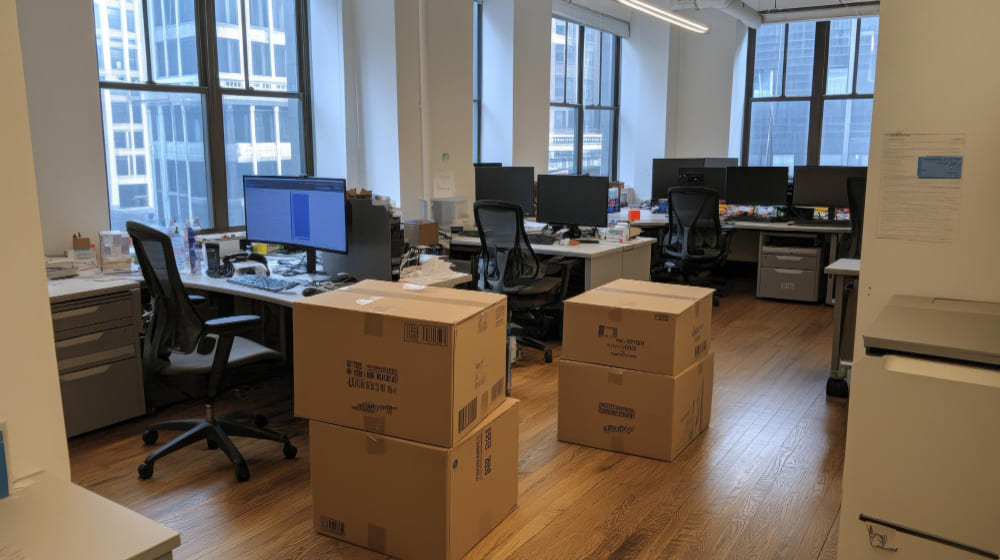
The first 90 days after moving in office spaces are not just about adjusting to a new location—they represent a transformation in how a business functions, collaborates, and plans for growth.
For many organizations, this period reveals the difference between simply occupying an office and operating within a workspace designed to enhance productivity and efficiency. Unlike traditional setups that require months of coordination, modern managed office environments enable businesses to work seamlessly from day one.
This makes the first three months a crucial phase for operational alignment and performance improvement.
Why the First 90 Days After Moving in Office Spaces Matter
The initial 90 days establish the foundation for long-term efficiency, cost control, and scalability.
Organizations transitioning into ready-to-use workspaces often experience:
- Faster operational readiness
- Reduced administrative workload
- Improved employee productivity
- Better alignment between workplace infrastructure and business strategy
These early gains allow leadership teams to focus on growth instead of facility management.
Days 1–30: Establishing Operational Stability
Plug-and-Play Infrastructure Enables Immediate Functionality
During the first phase of the first 90 days after moving in office spaces, businesses benefit from fully operational infrastructure—IT systems, furniture, connectivity, and utilities are already in place.
Teams can begin working immediately without delays caused by installations or vendor coordination, ensuring uninterrupted business continuity.
Administrative Complexity Is Significantly Reduced
Routine responsibilities such as maintenance, security, and facility operations are centrally managed.
This reduces the burden on HR and administrative teams, allowing them to concentrate on employee engagement and operational priorities.
Days 30–60: Productivity and Employee Experience Improve
Teams Adapt to Purpose-Built Work Environments
As employees settle into structured, professionally designed workspaces, workflows become smoother and collaboration improves.
rganizations begin to notice:
- Faster onboarding processes
- Reduced operational disruptions
- Better communication across teams
- Increased day-to-day efficiency
The Workplace Begins Supporting Talent Strategy
A well-managed office environment enhances employee satisfaction, helping businesses strengthen morale, culture, and retention.
At this stage, the workspace evolves into a contributor to organizational performance rather than just a physical location.
Days 60–90: Financial Predictability and Scalability Become Clear
Cost Structures Become Transparent and Manageable
One of the biggest advantages realized during the first 90 days after moving in office spaces is financial clarity.
Instead of managing multiple service providers and fluctuating costs, organizations operate with consolidated, predictable expense structures. This supports:
- Accurate budgeting
- Better financial forecasting
- Reduced hidden operational costs
Scalability Without Disruption
As business needs evolve, companies can expand teams or adjust workspace requirements without major reinvestment or relocation.
This flexibility allows organizations to scale efficiently while maintaining operational stability.
Strategic Insights Gained by Leadership
By the end of the first quarter, leadership teams often observe measurable strategic benefits:
- Time previously spent on office management is redirected toward growth initiatives
- Operational readiness enables faster execution of business plans
- Workplace costs align more closely with actual usage
- Expansion decisions become easier and less risky
- The office transforms into a strategic asset rather than a fixed obligation
Long-Term Business Impact Begins in the First Quarter
The habits and systems established during this early phase influence how organizations grow in the future.
Companies that achieve streamlined operations early are better positioned to:
- Respond quickly to market opportunities
- Attract and retain high-quality talent
- Optimize resource allocation
- Scale without infrastructure-related delays
The first 90 days act as a launchpad for sustainable and agile growth.
Conclusion
The first 90 days after moving in office spaces are not simply about relocation—they represent a reset in how a business operates.
With immediate functionality, improved employee experience, and predictable cost structures, organizations can focus on innovation, performance, and expansion.
When workspace strategy aligns with business strategy from the beginning, the benefits extend far beyond the initial three months.
Frequently Asked Questions (FAQs)
Q1. How quickly can a company become operational after moving?
Ans. Most organizations can begin functioning immediately because essential infrastructure and services are already in place.
Q2. Why are the first 90 days considered critical?
Ans. This period determines how effectively teams adapt, how quickly productivity stabilizes, and how efficiently costs are managed.
Q3. Does this model help with financial planning?
Ans. Yes. Consolidated and predictable operational costs provide better visibility for budgeting and forecasting.
Q4. Can companies expand easily after moving in?
Ans. Flexible workspace models allow businesses to scale or reconfigure without major disruption.
Q5. Is this suitable for both large enterprises and growing businesses?
Ans. Organizations of all sizes benefit from reduced setup complexity, operational efficiency, and scalable workplace solutions.