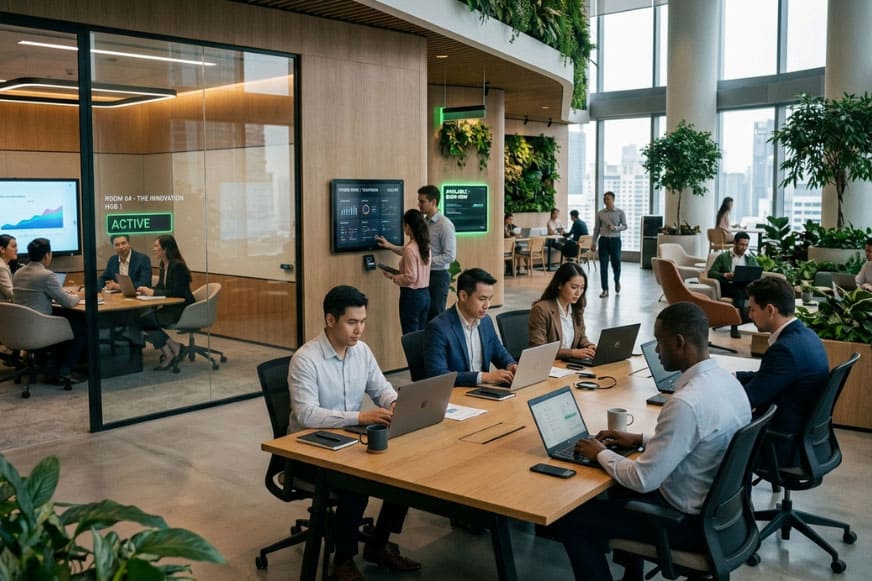
The way companies work is changing fast. Companies now want offices that help people work together and have the technology. This is where smart office spaces come in.
Smart office spaces are changing how people work. They use technology, smart design and things that help employees. They create work environments with lighting, smart systems, places for people to work together and ways to save energy.
If you have a company growing, getting a good office space can help people work better make them happier and help the company work more efficiently.
In this blog we will talk about what smart office spaces are what they have what are the benefits and why they are important for modern companies.
What Are Smart Office Spaces?
Smart office spaces are offices that use technology. They help people work better communicate better and be more comfortable. They do this by using systems and smart technology.
These offices use things like:
- Internet of Things
- Artificial Intelligence
- Sensors
- Cloud-based systems
- Automatic lighting and temperature control
- Smart meeting room solutions
- Access control and security systems
The main goal of smart office spaces is to make it easy for people to work. They make the workplace work better and help employees feel good.
Why Smart Office Spaces Are Gaining Popularity
More and more companies want smart office spaces. This is because of changes in how people work and the technology they use.
Hybrid Work Culture
Companies are using hybrid ways of working. Smart offices help with things like seating booking meeting rooms and using the workspace.
Focus on Employee Experience
Companies care about their employees. They want them to be happy and work well. Smart offices create a workplace with lighting, clean air and comfortable designs.
Increased Operational Efficiency
Using smart systems reduces the work that needs to be done. It helps companies use energy and take care of the office better.
Sustainability Goals
Many companies want to be kind to the environment. Smart office systems use energy and do not hurt the environment as much.
Key Features of Smart Office Spaces
Intelligent Lighting Systems
The lighting in smart offices changes depending on if someone is there and how natural light there is. This helps save energy and makes a comfortable workplace.
Benefits include:
- Using less electricity
- Making employees more comfortable
- Helping people work better
Smart Climate Control
The temperature and air quality in smart offices are controlled by advanced systems. This helps employees feel good uses less energy and keeps the air clean.
Enabled Workspaces
Smart offices use Internet of Things devices to connect systems and equipment. This allows for communication and automatic control.
Examples include:
- Smart desks
- Sensors that detect if someone is there
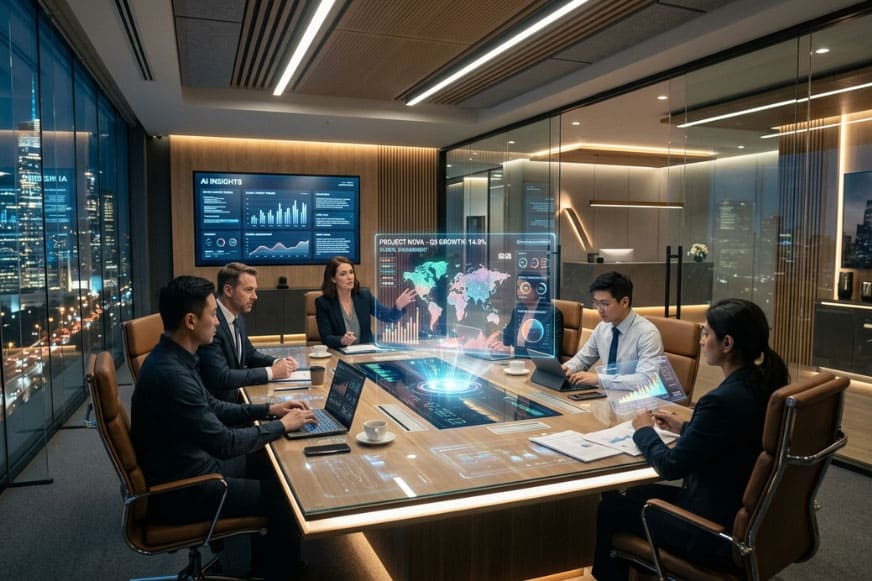
- Connected conference rooms
- Automatic access systems
Smart Meeting Rooms
Modern offices use technology in meeting rooms. This helps people work together better.
Features may include:
- Video conferencing
- Presentations without wires
- Scheduling systems
- Systems that can be controlled with your voice
Flexible Workspace Solutions
Smart office spaces support flexible ways of working. They offer:
- Hot desking
- Places for people to work together
- Quiet rooms
- Shared meeting spaces
This flexibility helps companies grow and change easily.
Advanced Security Systems
Security is important in smart offices. Modern systems include:
- Facial recognition
- Biometric authentication
- Smart surveillance systems
- Digital visitor management
These technologies make the workplace safer and control access better.
Benefits of Smart Office Spaces
Improved Productivity
A well-designed smart office helps employees work more efficiently. Automatic systems reduce distractions and make the workflow smoother.
Better Employee Satisfaction
Comfortable and technology-enabled workplaces make employees happier and more engaged.
Enhanced Collaboration
Smart offices encourage teamwork. They offer spaces and tools that help people communicate.
Cost Savings
Smart office technology reduces expenses. It uses energy efficiently reduces maintenance costs and uses space better.
Sustainability and Energy Efficiency
Smart office spaces support eco-friendly business operations. They reduce waste and use resources better.
Data-Driven Decision Making
Smart office systems provide data about the workplace. Companies can use this data to improve operations and employee experiences.
Smart Office Design Trends
Activity-Based Workspaces
Modern offices are designed around activities. Employees can choose spaces based on what they need to do.
Examples include:
- Collaboration zones
- Focus rooms
- Lounge areas
- Creative brainstorming spaces
Biophilic Design
Biophilic office design includes elements like plants, natural light and greenery. This improves employee well-being and reduces stress.
Touchless Technology
After the pandemic touchless technologies are being used more. Examples include:
- Doors that open automatically
- Devices that can be controlled with your voice
- Access systems that do not require touch
Wellness-Centric Offices
Employee well-being is a priority in office planning.
Features include:
- Air purification systems
- Wellness rooms
- Standing desks
- Fitness environments
How Smart Office Spaces Improve Business Growth
Attracting Top Talent
Professionals want to work in places that support flexibility innovation and employee well-being.
Supporting Scalability
Growing companies need workspaces that can adapt. Smart office infrastructure allows companies to grow without disruptions.
Strengthening Brand Image
A modern and technology-advanced office creates a strong impression on clients investors and partners.
Encouraging Innovation
Collaborative office environments foster innovation among teams.
Choosing the Right Smart Office Space
Choosing the right smart office space depends on your company’s goals and needs.
Consider:
- Location
- Technology infrastructure
- Flexibility
- Employee experience
- Security
The Future of Smart Office Spaces
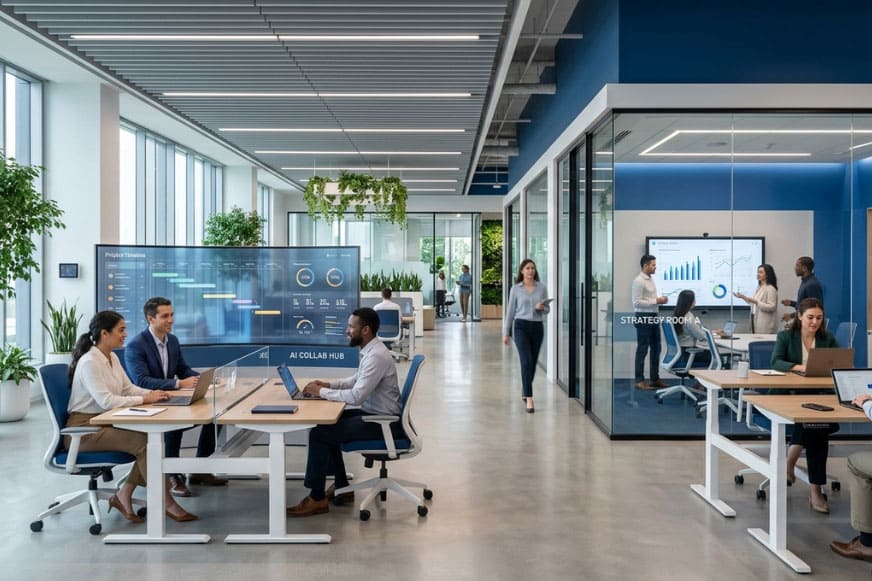
The future workplace will continue to change. Emerging trends include:
- AI-powered workplace management
- Predictive maintenance systems
- Occupancy analytics
- Virtual collaboration environments
- Sustainable smart buildings
Companies that adopt smart office solutions now will be better prepared for the future of work.
Smart office spaces are changing workplaces. They combine technology flexibility and smart design. These environments improve productivity employee satisfaction operational efficiency and sustainability.
As companies adapt to flexible ways of working and digital transformation investing in smart office spaces is becoming more important.
The future of work is smart connected and focused on experience. Smart office spaces are leading this transformation.
FAQs About Smart Office Spaces
What is a smart office space?
A smart office space is a workplace that uses technology to improve efficiency comfort and productivity.
What are the benefits of smart office spaces?
Smart office spaces offer benefits like improved productivity employee satisfaction energy efficiency collaboration and cost savings.
How do smart offices improve productivity?
Smart offices automate tasks optimize the workspace and provide advanced collaboration tools. These help employees work efficiently.
Are smart office spaces suitable for small businesses?
Yes smart office solutions can benefit companies of all sizes. They improve flexibility efficiency and workplace management.
What technologies are used in smart office spaces?
Common technologies include Internet of Things devices Artificial Intelligence systems smart lighting automatic climate control cloud-based collaboration tools and biometric security systems.
Why are companies investing in smart office spaces?
Companies invest in smart offices to support hybrid work models improve employee experiences reduce operational costs and enhance workplace efficiency.
How do smart office spaces support sustainability?
Smart offices reduce energy consumption using smart lighting automatic HVAC systems and efficient resource management.
What is the future of smart office spaces?
The future of smart office spaces includes Artificial Intelligence-driven workplace management advanced automation predictive analytics and highly flexible work environments.