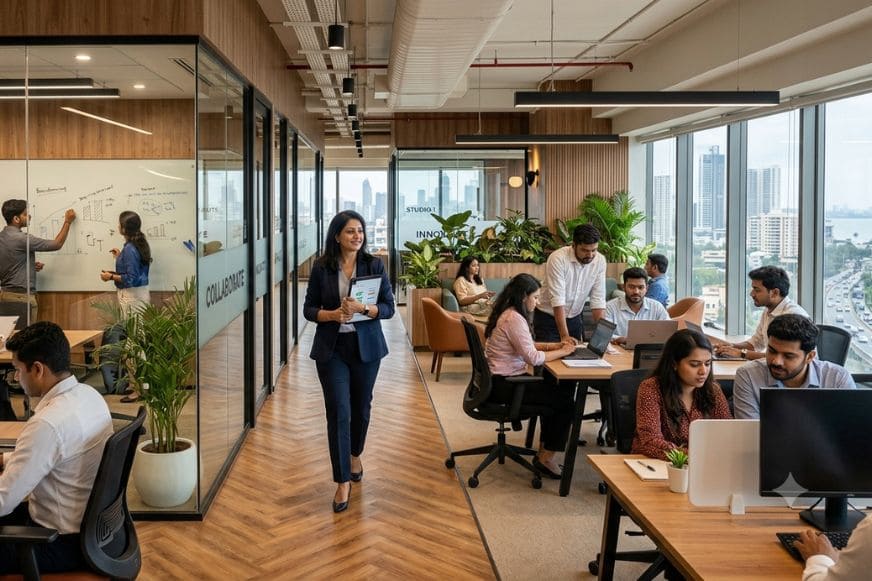
For Chief Financial Officers office space is no longer a cost. It is an investment that affects how well the business does how productive the employees are and the long-term growth of the company. As businesses change and grow Chief Financial Officers have to make decisions that balance money matters with the goals of the organization.
The role of Chief Financial Officers has changed a lot. They are not just in charge of budgets and predictions. They also make decisions about the workplace. This change has affected how organizations look at office spaces. Modern office spaces are expected to be good for business. Companies want workplaces that are easy to manage save money make employees happy and help the company grow.
This is where managed office spaces are becoming popular.
The Change from Saving Money to Creating Value
In the past finance teams focused on getting the rent deals. While saving money is still important Chief Financial Officers now know that the cheapest office is not always the best. A designed workplace can lead to unhappy employees, high maintenance costs and wasted time. Modern office spaces are judged on their ability to create value in the run.
Instead of asking "how much does this office cost" Chief Financial Officers now ask:
- Will this office make our work easier?
- Can it help our business grow?
- Will it reduce our workload?
- Is it easy to predict the costs?
- Will our employees like working?
The answers to these questions help decide if a workspace is an investment or just another expense.
Financial Predictability is Important
One thing Chief Financial Officers want from office spaces is clear and transparent costs. They do not like surprise bills for maintenance, repairs or utilities. Managed office spaces make it easy to plan by offering a monthly payment that includes many services.
This helps finance teams make budgets without worrying about surprise costs. It also makes it easier to manage cash flow and predict the future.
Saving Money is a Priority
Businesses need money to grow. Every rupee spent on office interiors, furniture and technology is money that cannot be used for things. Many Chief Financial Officers prefer an approach to workplace management. Instead of spending a lot on offices they choose managed office spaces that are ready to use.
This approach helps save money and allows businesses to spend on innovation, hiring, marketing and growth. Not having to invest in offices is a financial advantage.
Flexibility Helps Businesses Grow
Business needs change often. Companies grow, start departments or change their operations. Traditional office leases can limit this flexibility. Modern office spaces need to adapt to changing businesses. Flexible workspace solutions allow organizations to grow or shrink without disruptions.
This flexibility is very valuable for growing startups, IT companies and other businesses. Finance leaders like this flexibility because it reduces long-term commitments and supports business growth.
Technology is a Must
Technology is no longer a convenience. It is a necessity for businesses. Chief Financial Officers expect office spaces to have technology that supports productivity, security and efficiency. Modern workplaces have high-speed internet secure access systems and smart meeting rooms.
These technologies simplify processes. Improve the use of space. Many organizations also use data to understand how space is used and make decisions about estate. For finance teams better data means investment decisions.

Happy Employees Mean Better Financial Performance
Happy employees are closely linked to business success. A nice workplace helps organizations keep professionals improve collaboration reduce absenteeism and strengthen their brand. Losing employees is expensive. Recruitment, training and lost productivity all affect business profitability.
Modern office spaces help reduce these costs by creating environments where employees enjoy working. Comfortable workstations, meeting rooms and professional design contribute to employee engagement. Chief Financial Officers recognize that workplace quality affects business performance.
Efficiency Reduces Hidden Costs
Managing an office requires coordination with vendors. This takes up management time. Modern managed office spaces simplify these services under one provider.
As a result businesses spend time managing vendors and more time on priorities. Efficiency reduces burdens. Improves service quality. For finance teams this means operational costs and better productivity.
Sustainability is Important
Sustainability is now part of business strategy. Investors, clients and employees evaluate organizations based on sustainability. Modern office spaces support these goals through energy-efficient systems, waste management and responsible operations.
Sustainable workplaces reduce costs. Support environmental goals. Many Chief Financial Officers now consider sustainability when evaluating office spaces. Green workplaces are no longer optional; they are an advantage.
Business Continuity and Risk Management
Unexpected disruptions can affect operations and revenue. Modern office spaces provide continuity through infrastructure, internet connectivity and professional management.
Risk reduction is important for finance leaders because disruptions often mean losses.
Location Matters
Location is still important. Chief Financial Officers look at it differently. Accessibility affects employee commutes, client meetings and business reputation. Finance leaders also consider transportation, nearby businesses, parking and future development.
A located office improves efficiency and supports growth. It also enhances customer experience and corporate image.
Why Managed Office Spaces Work
Managed office spaces combine efficiency with flexibility. Organizations get an operational workspace that supports business objectives. Businesses benefit from simplicity, ready-to-use infrastructure, scalability and premium experiences.
For finance leaders this creates a workplace model that balances excellence with discipline.
How Sonip Space Helps
At Sonip Space we understand that workplace decisions involve more than an office. Our managed office solutions help businesses reduce complexity and improve flexibility. From furnished offices to integrated facility management Sonip Space enables organizations to focus on growth.
Whether you are a startup or a growing enterprise our office solutions are built around your evolving needs.
Conclusion
The expectations of Chief Financial Officers have changed. Modern office spaces need to deliver predictability, efficiency, employee satisfaction, flexibility, technology and long-term value. Organizations that invest in workplace solutions position themselves for growth and better performance.
Managed office spaces address these expectations by offering a workplace ecosystem that reduces complexity and supports success. As workplace strategy evolves finance leaders will see office spaces not as expenses, but as investments that enable sustainable growth.